Overview
One of Australia’s largest beef producers engaged Arinco to modernise its station-operations analytics, replacing fragmented data sources and manual reporting processes with a trusted, scalable analytics foundation. The result is a single source of truth for rainfall, stocking and operational data, automated and auditable data delivery, and self-service access to insights through both traditional reporting and natural-language analytics.
Business Challenge
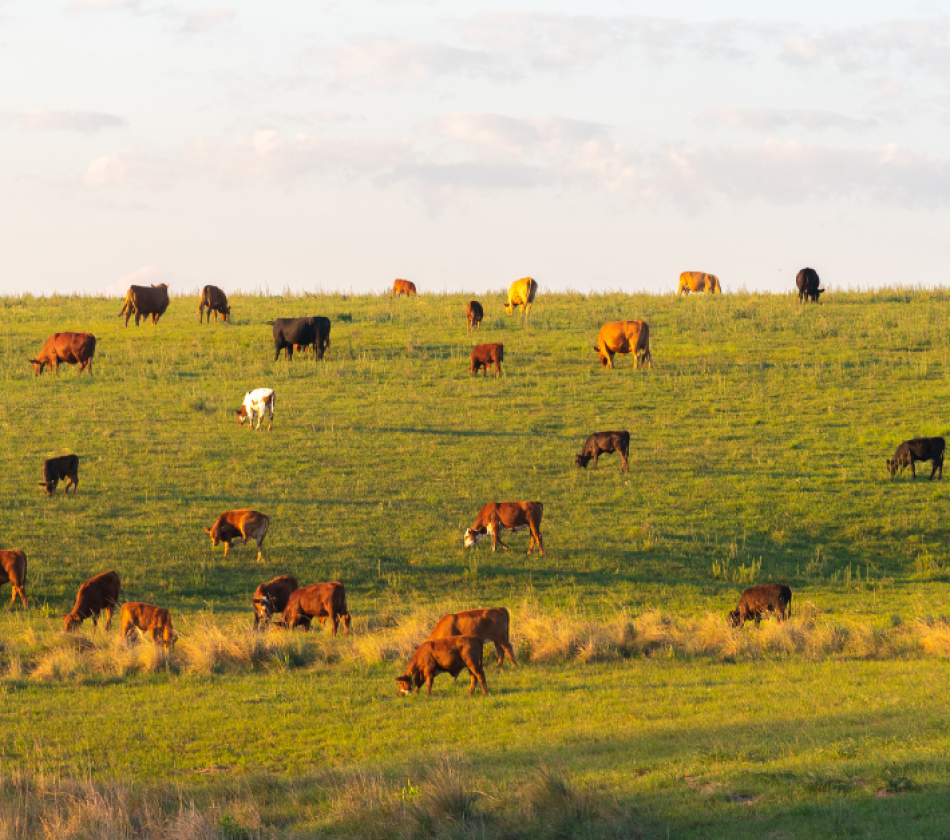
The organisations grazing operations cover a large network of cattle stations where timely visibility of rainfall, stocking levels, groundcover and land condition is critical to operational decisions such as stocking rates, livestock movements and drought management.
The objective was to modernise the analytics foundation while preserving the reporting experience relied on by operational teams.
The customer’s station-operations reporting had grown organically and was increasingly difficult to scale and maintain. The accuracy of the data was an increasing challenge due to;
- Fragmented data: Rainfall, stocking, groundcover and sensor or IoT telemetry lived across Excel, on-premises SQL Server and files that were compiled together manually.
- Complex operational reporting: Operational Power BI reports refreshed daily through an on-premises gateway and were published from Power BI Desktop, with no version control, no automated deployment and regular manual intervention.
- Trust and consistency gaps: Without a governed, single source of truth, there was a risk of inconsistent metrics and differing versions of the same report.
- Limited ability to scale: The manual, desktop-driven approach made it hard to add new data sources or domains safely, slowing the delivery of new insight.
Solution
Arinco partnered with the customer to deliver a modern, governed data platform on Azure Databricks, that bought existing reporting into the platform without disrupting users.
A Governed Medallion Lakehouse
Arinco built a medallion architecture – landing, bronze, silver and gold – on Azure Databricks with Unity Catalog governance and Delta Live Tables. Raw station data lands in an open format, is conformed into trusted dimensions and facts, and is served as curated gold marts. End-to-end lineage provides visibility into how data moves through the platform, improving trust and auditability.
Automated, Auditable Delivery
The entire platform is defined as code using Databricks Asset Bundles and deployed through Azure DevOps CI/CD across separate development and production environments. Changes move from source control through automated validation and deployment, replacing manual desktop publishing with a repeatable, auditable process.
Modernisation without rebuilding reports
Rather than redesigning the organisation’s operational rainfall and stocking report, Arinco preserved the existing reporting experience by replicating the report’s required data contract within the lakehouse. The existing Power BI report was then repointed from the on-premises source to Databricks with no semantic-model rework, so users kept the same report and transitioned without disruption or downtime.
Natural-Language Analytics with Databricks Genie
To broaden access to operational insight, Arinco implemented Databricks Genie and an AI/BI dashboard that allows users to ask questions of station data using natural language. The solution was delivered through a secure internal web application using managed identity and Azure Key Vault.
Enablement and Handover
Arinco provided architecture documentation, developer onboarding materials and CI/CD operating guides, supported by knowledge-transfer sessions that equipped the customer’s team to independently manage and extend the platform.
Outcomes
The engagement gave the customer a stronger and more trustworthy foundation for station-operations analytics.
- Trusted decision-making: Operational teams now access a consistent view of rainfall, stocking and station analytics from a governed data platform.
- Reduced operational overhead: Automated ingestion, transformation and deployment processes reduce manual reporting effort and minimise deployment risk.
- Seamless modernisation: Existing Power BI reporting was migrated to the lakehouse without requiring report redevelopment or user retraining.
- Self-service insights: Databricks Genie enables users to explore operational data through natural-language queries, reducing dependence on specialist analysts.
- Foundations for future growth: The platform provides a repeatable framework for onboarding new data sources, domains and AI-enabled capabilities.
What’s Next?
The platform establishes a foundation for future expansion across additional operational data domains and AI-enabled analytics use cases. Potential future opportunities include broader geospatial reporting, additional livestock and land-condition data sources, and expanded adoption of natural-language analytics capabilities.